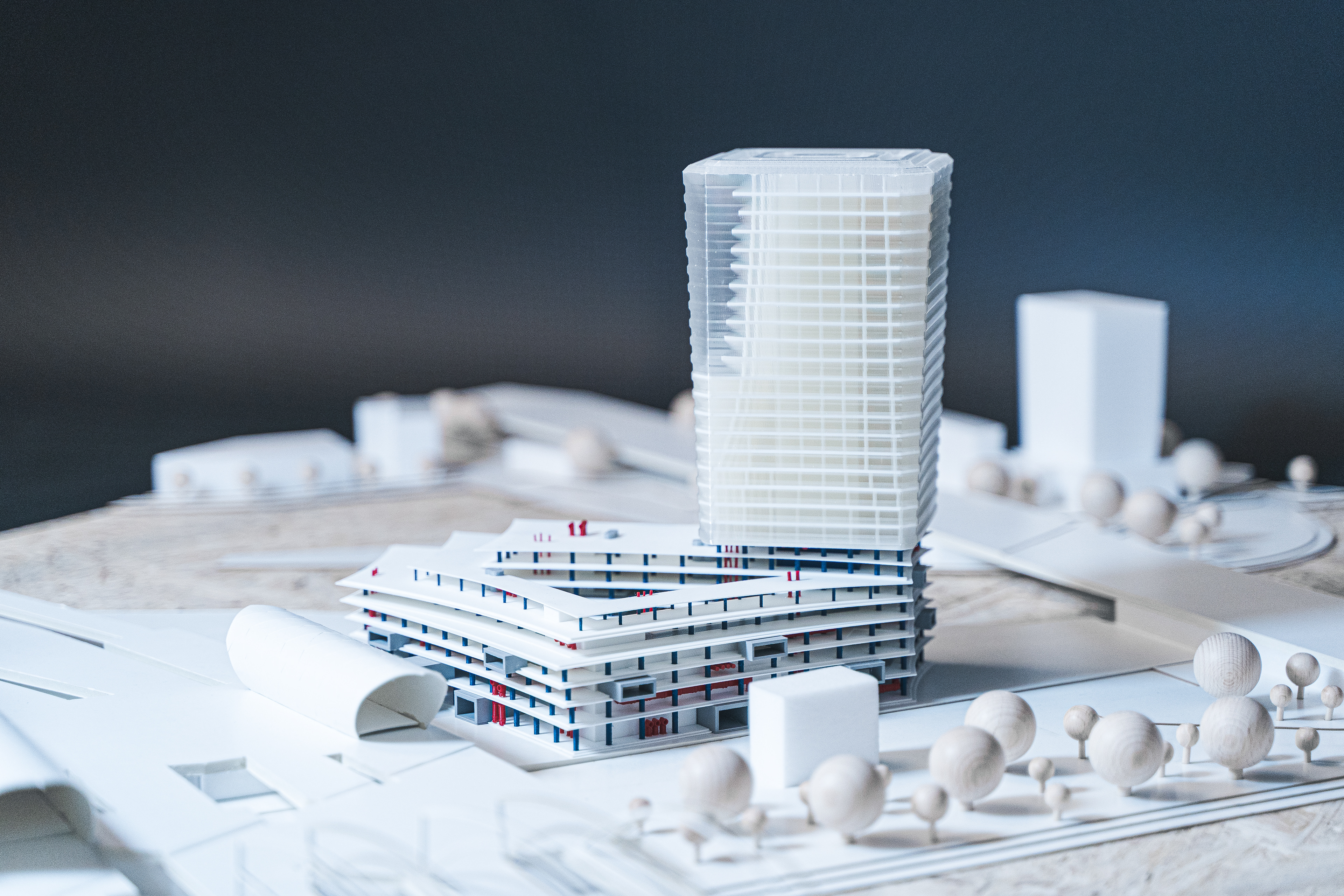
The theme of this design project is the development of a meaningful usage concept idea, and the creation of corresponding construction plans based on the existing 'building ruin' of the unfinished “Elbtower” in Hamburg's HafenCity.
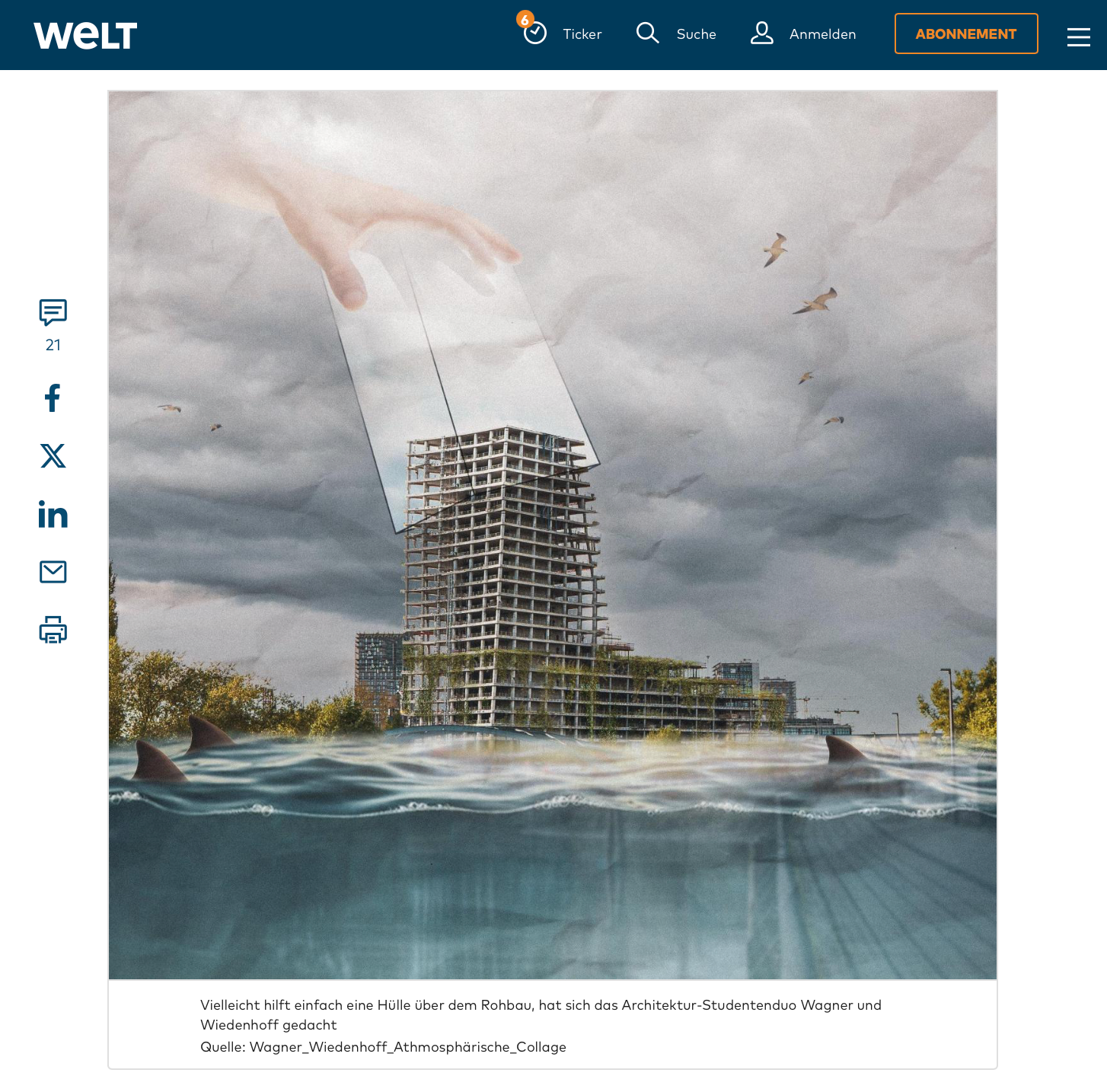
Situated alongside the Elbe River and marking the end of the “HafenCity” district, the so called “Elbtower” was set to be a key element in the ongoing urban transformation of this once purely industrial port area. Designed by the UK-based architect “David Chipperfield”, the building was supposed to symbolize the entrance into the city by motorway and set to become Hamburg’s first ever skyscraper, reaching a height of 245 meters. Its original functions included a hotel, office spaces and shopping facilities. Construction of the “Elbtower” began in 2021, before being stopped in 2023 due to the investor being bankrupt. Today an only 100-meter-high concrete skeleton remains, with no further plans or investors in sight.
My following architectural drawings propose a possible repurpose of the unfinished concrete structure in a dystopian environment.
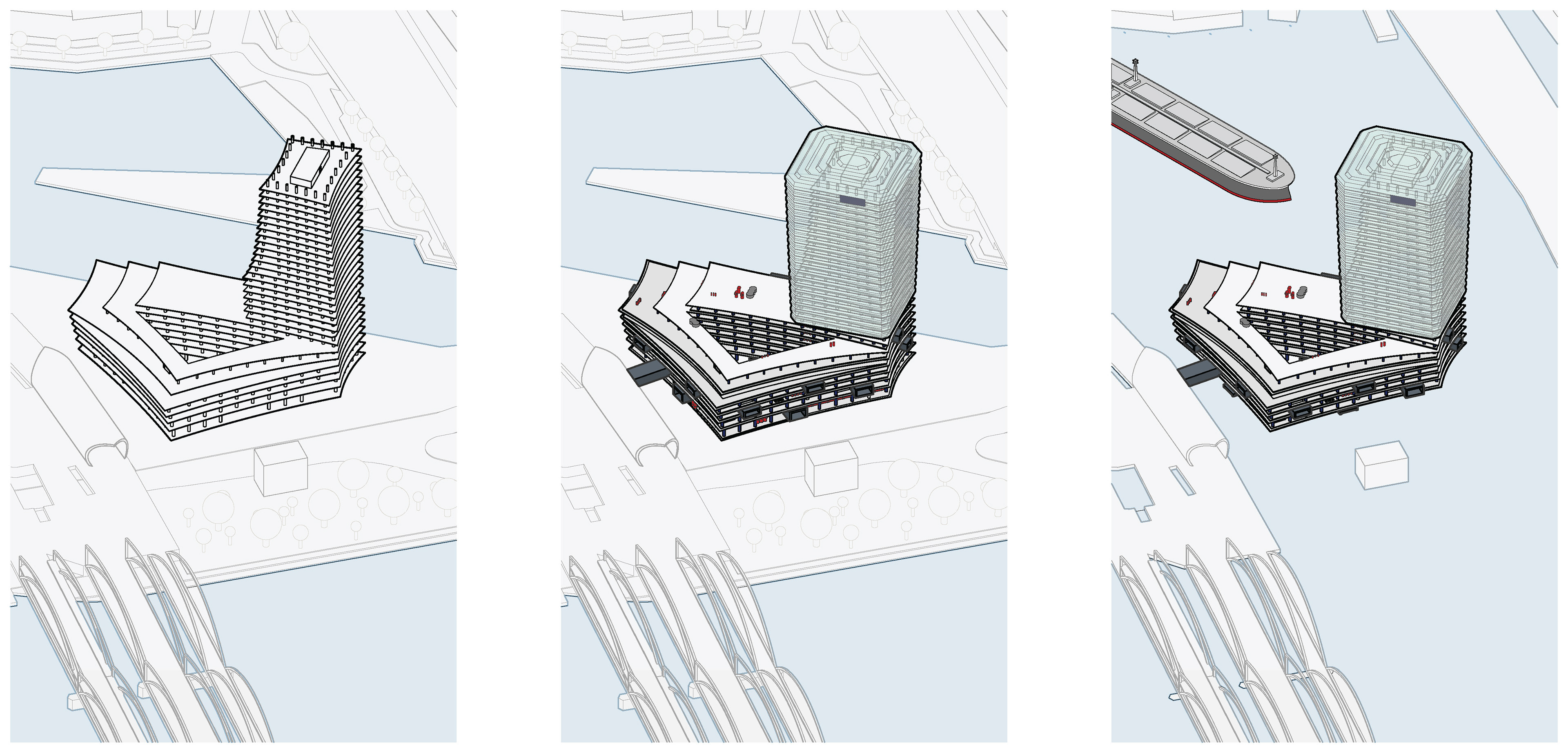
Baseline of my scenario is the vision that the ruin is taken over by the “HHLA”, the company running the harbor, making it the contemporary headquarters of Europe’s second strongest harbour facilities, well-equipped to face regularly occurring threats of flooding and storm surges.
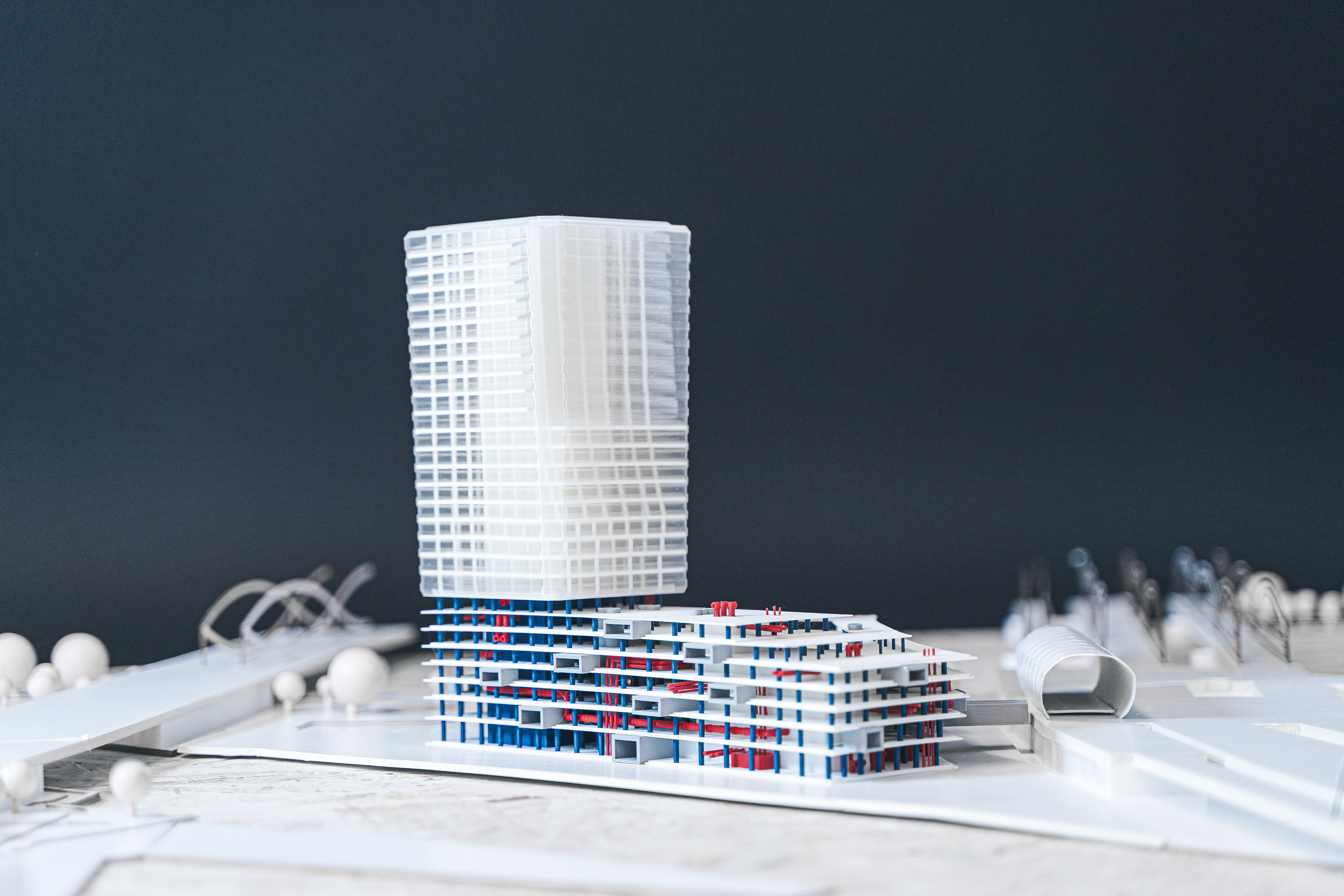
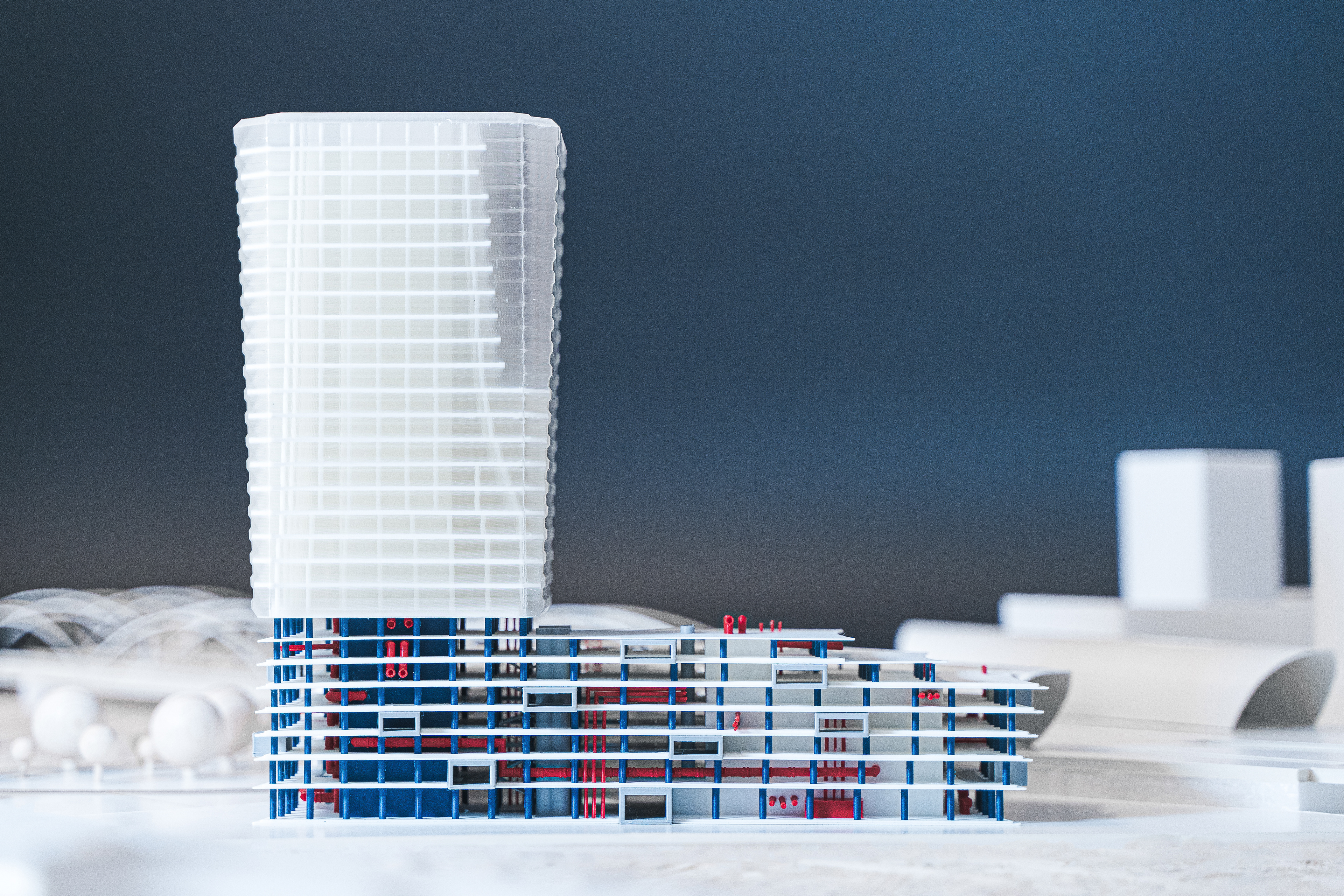
The building is divided into a triangular base and a tower section. Hereby the base of the building functions as a public area featuring exhibition spaces as well as recreational areas, whereas the tower houses office spaces and the operational command for the harbor. A red and blue color palate, inspired by the “HHLA” logo and cranes become an important visual aspect of the concepts’ design.
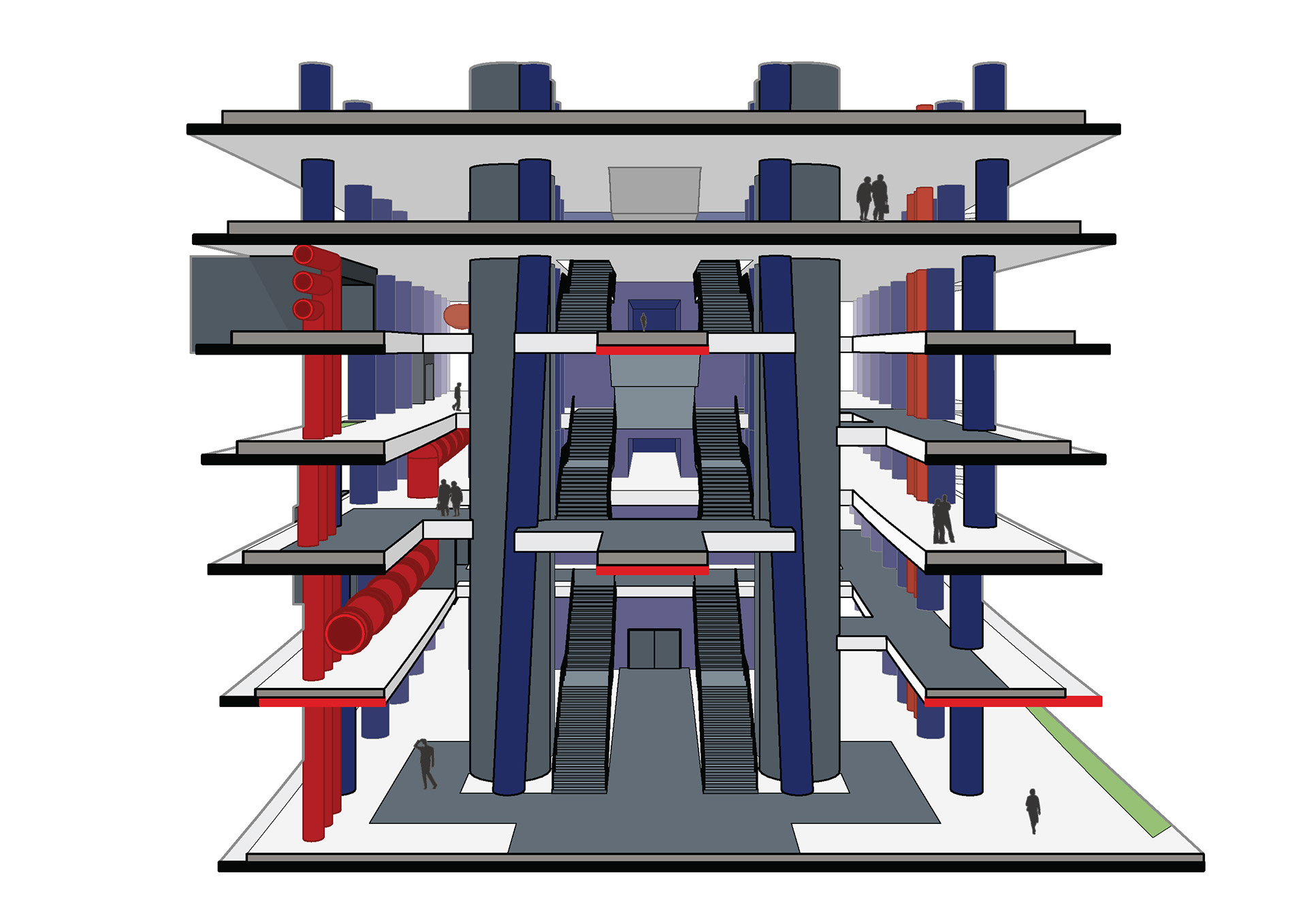
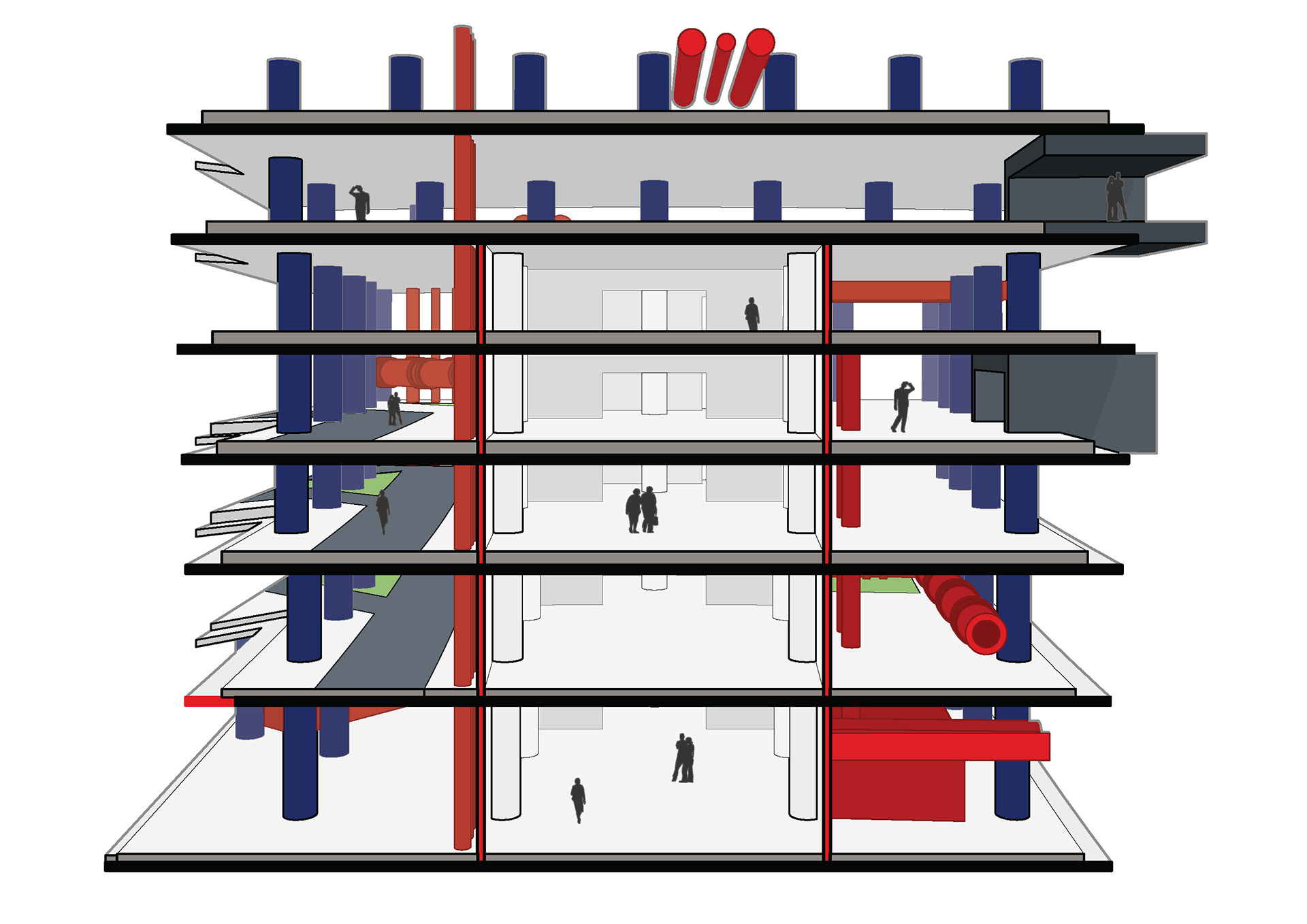
The first seven floors serve as a future proof base that can withstand rising water levels. Its concrete skeleton is left as it is, without a facade, making it exposed to nature and flushable when water rises. A special protecting coating is added to the bare concrete making it weather and water resistant. Furthermore, the buildings service technology is exposed within the skeleton. This marks a key element of the concepts overall design, contributing to its industrial appearance and reference to Hamburg’s harbor area. In addition to that, the lower part of the building serves as an area with public access and exhibition spaces. By connecting core structures and creating new volumes, closed and protected rooms are formed, housing exhibition spaces for the harbor’s history as well as showcasing future-themed displays. Additionally, a new central access point is added for the public sections, as well as walkways with viewing points on each floor. These outlooks are designed binocular-like, concentrating the view onto certain points of interest, as well as serving as docking stations in the event of high-water levels. Finally, the seventh-floor acts as a load bearing level for the tower part following above.
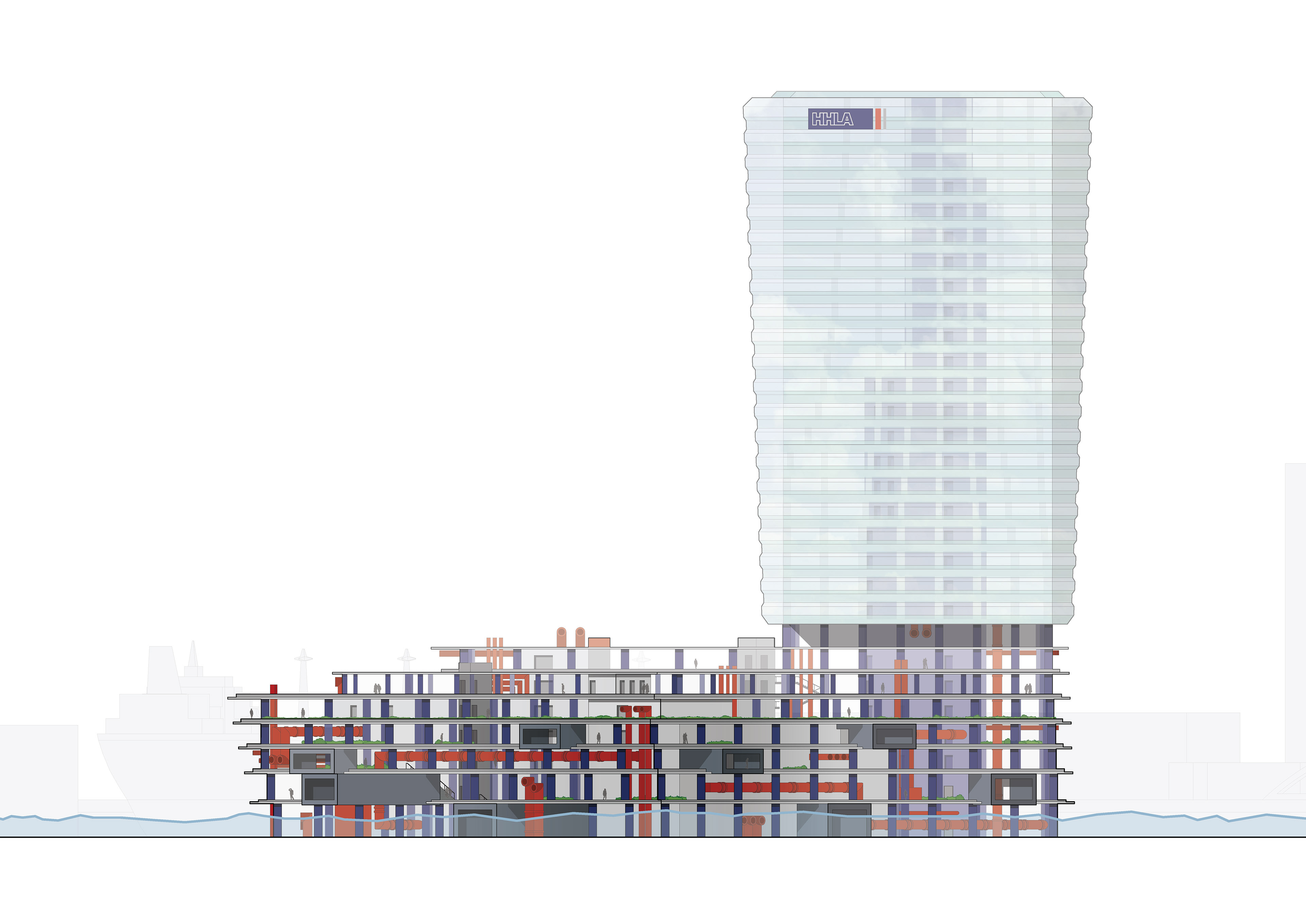
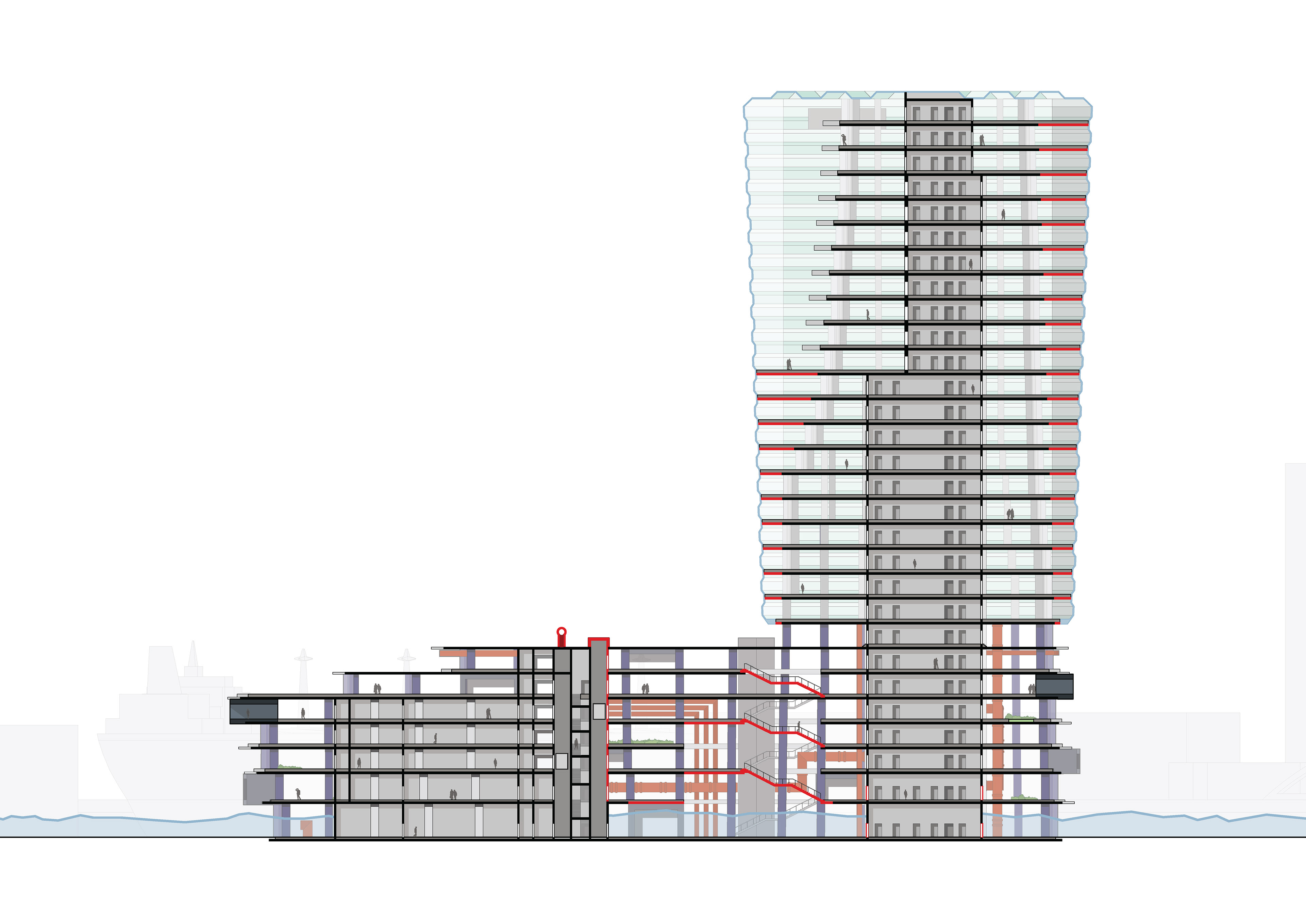
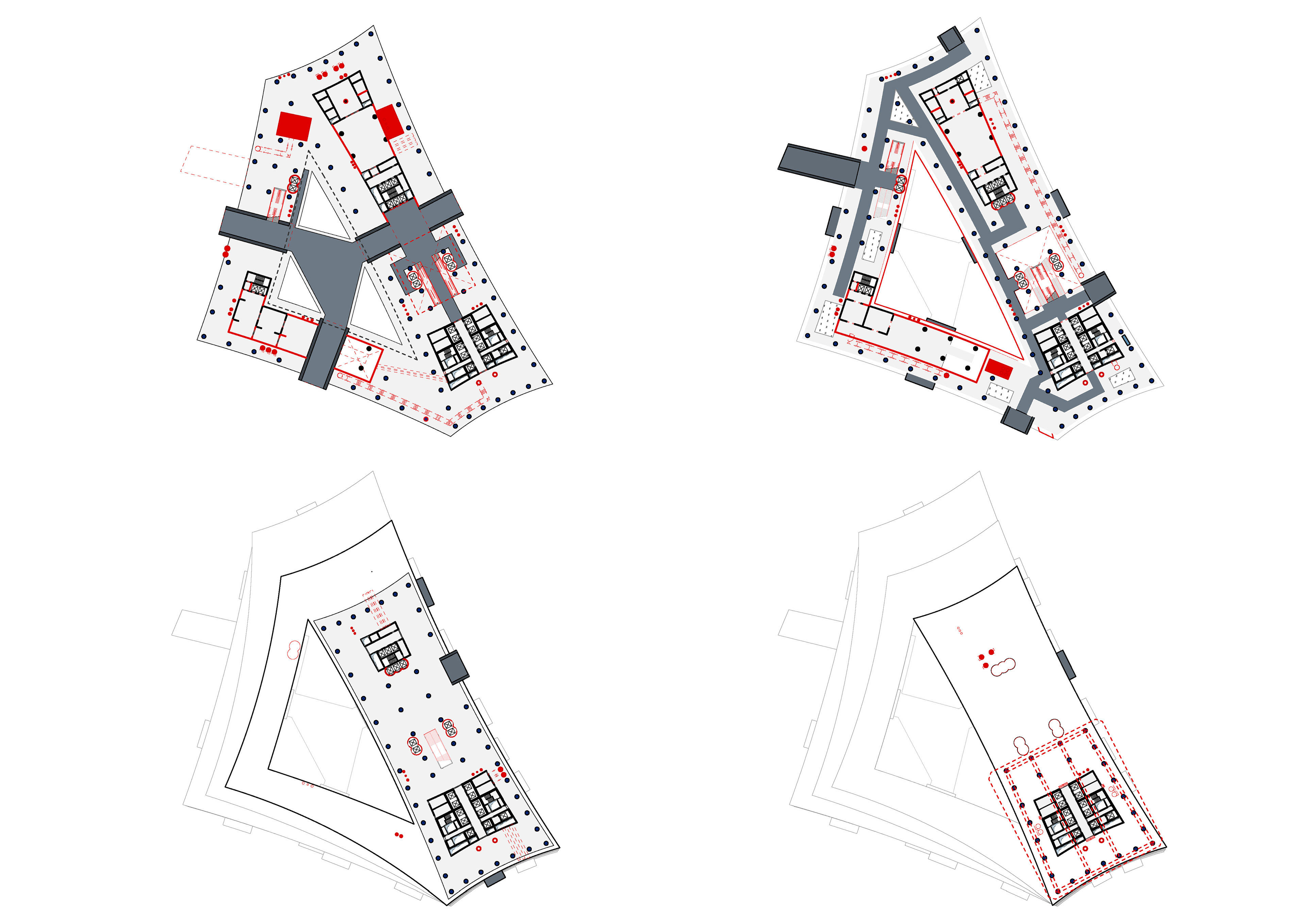
The first seven floors serve as a future proof base that can withstand rising water levels. Its concrete skeleton is left as it is, without a facade, making it exposed to nature and flushable when water rises. A special protecting coating is added to the bare concrete making it weather and water resistant. Furthermore, the buildings service technology is exposed within the skeleton. This marks a key element of the concepts overall design, contributing to its industrial appearance and reference to Hamburg’s harbor area. In addition to that, the lower part of the building serves as an area with public access and exhibition spaces. By connecting core structures and creating new volumes, closed and protected rooms are formed, housing exhibition spaces for the harbor’s history as well as showcasing future-themed displays. Additionally, a new central access point is added for the public sections, as well as walkways with viewing points on each floor. These outlooks are designed binocular-like, concentrating the view onto certain points of interest, as well as serving as docking stations in the event of high-water levels. Finally, the seventh-floor acts as a load bearing level for the tower part following above.
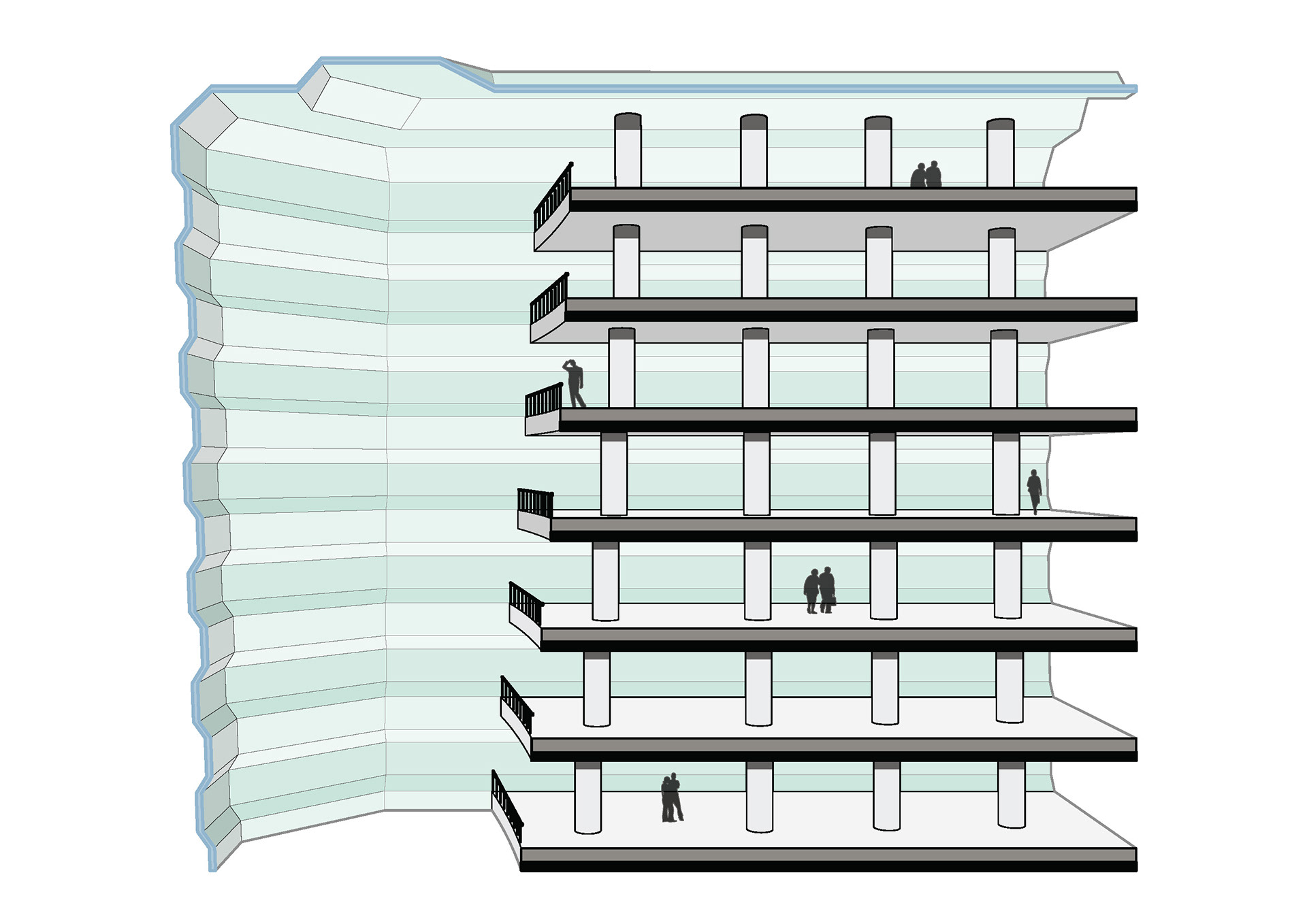
In the second section of the building a glass-sleeve frames the original concrete skeleton of the tower. The guiding concept hereby was to let the initial structure shine through, reminiscent of the buildings failed history. Besides that, the new shell is inspired by a shipping container and its three-dimensional surface. Furthermore, the new facade features a square-like footprint, opposed to the previously curved and layered one. As a result of that a gallery was formed, spreading across the towers top floors. The sectioning of the office spaces closely resembles those of Chipperfield’s original design proposal.