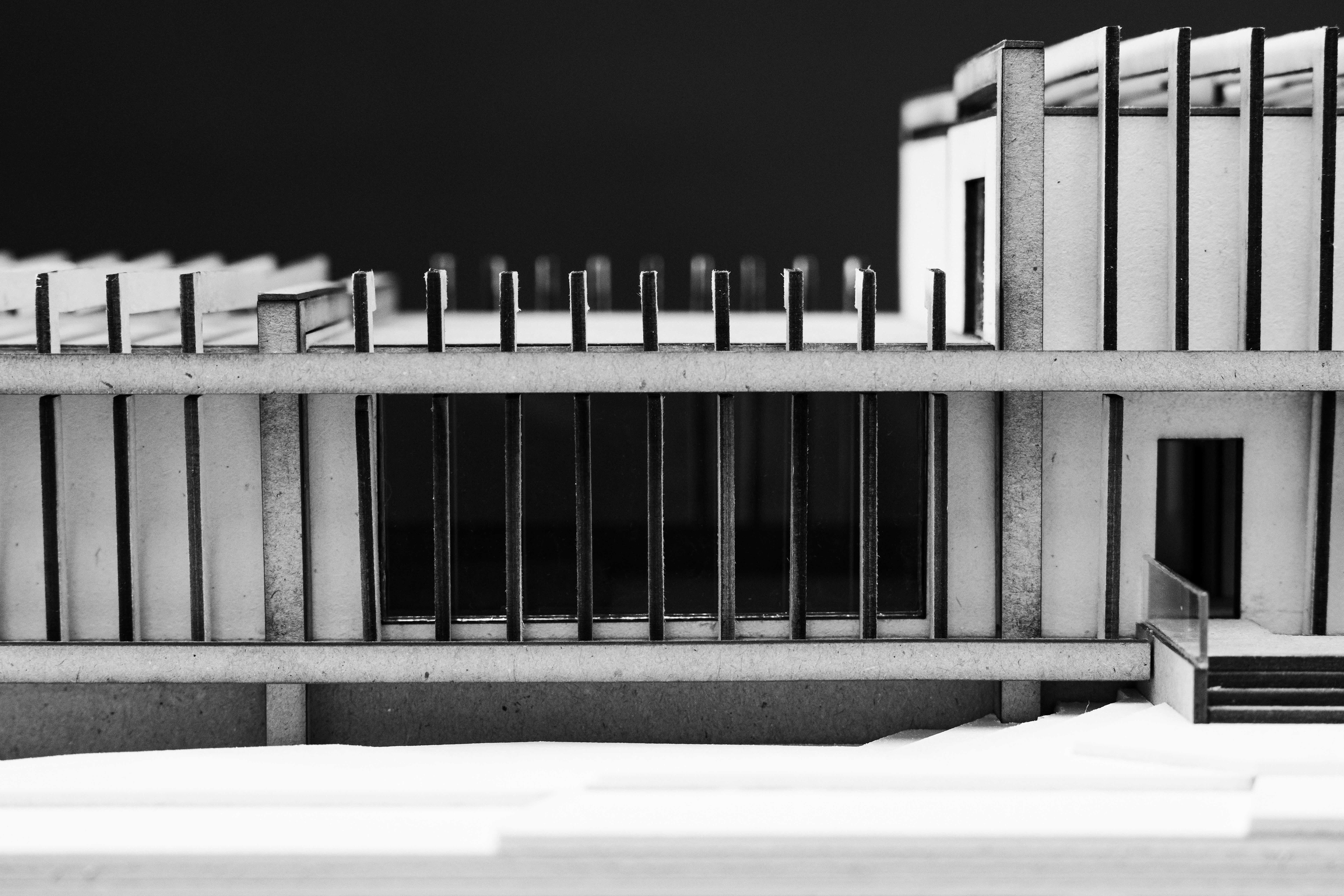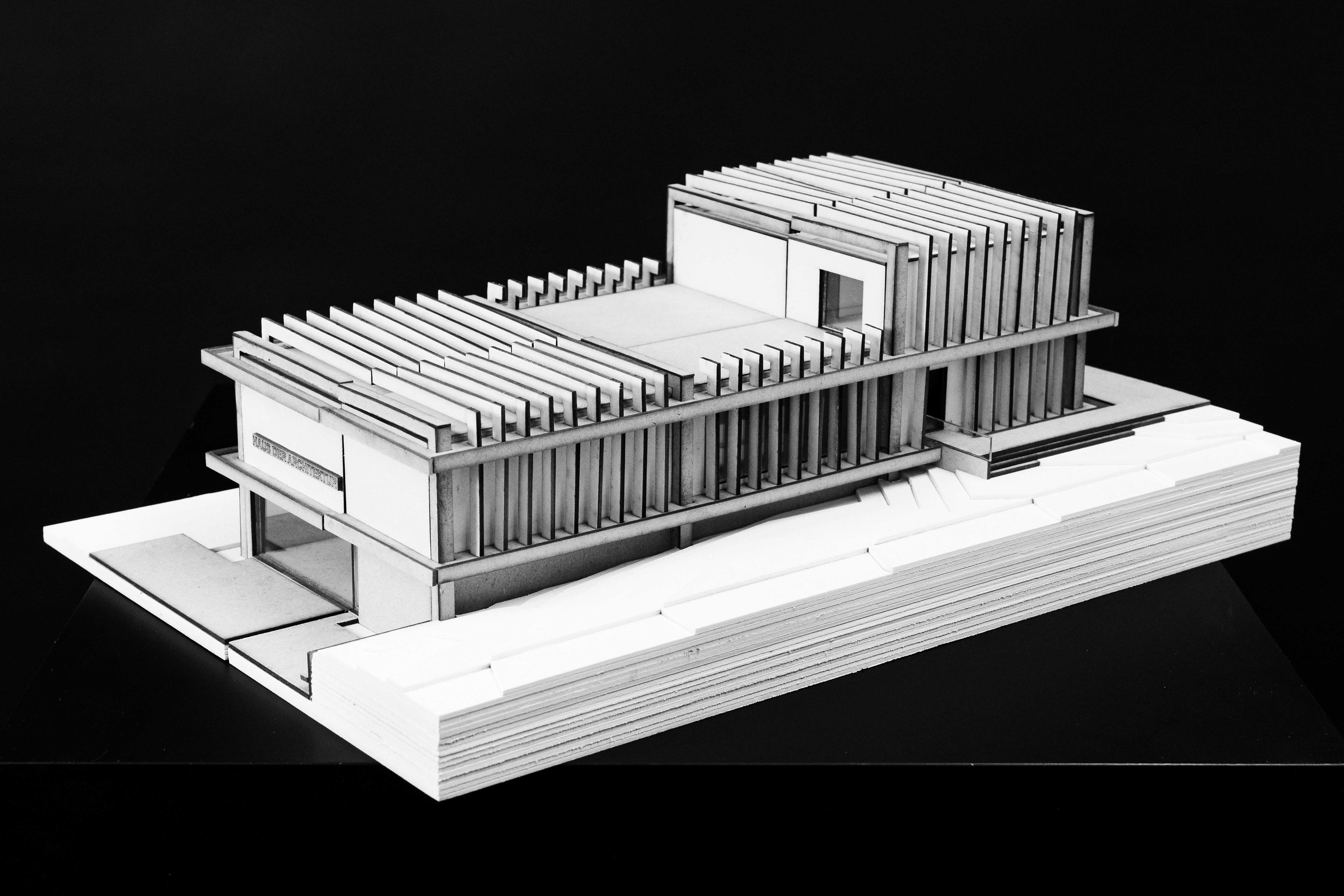
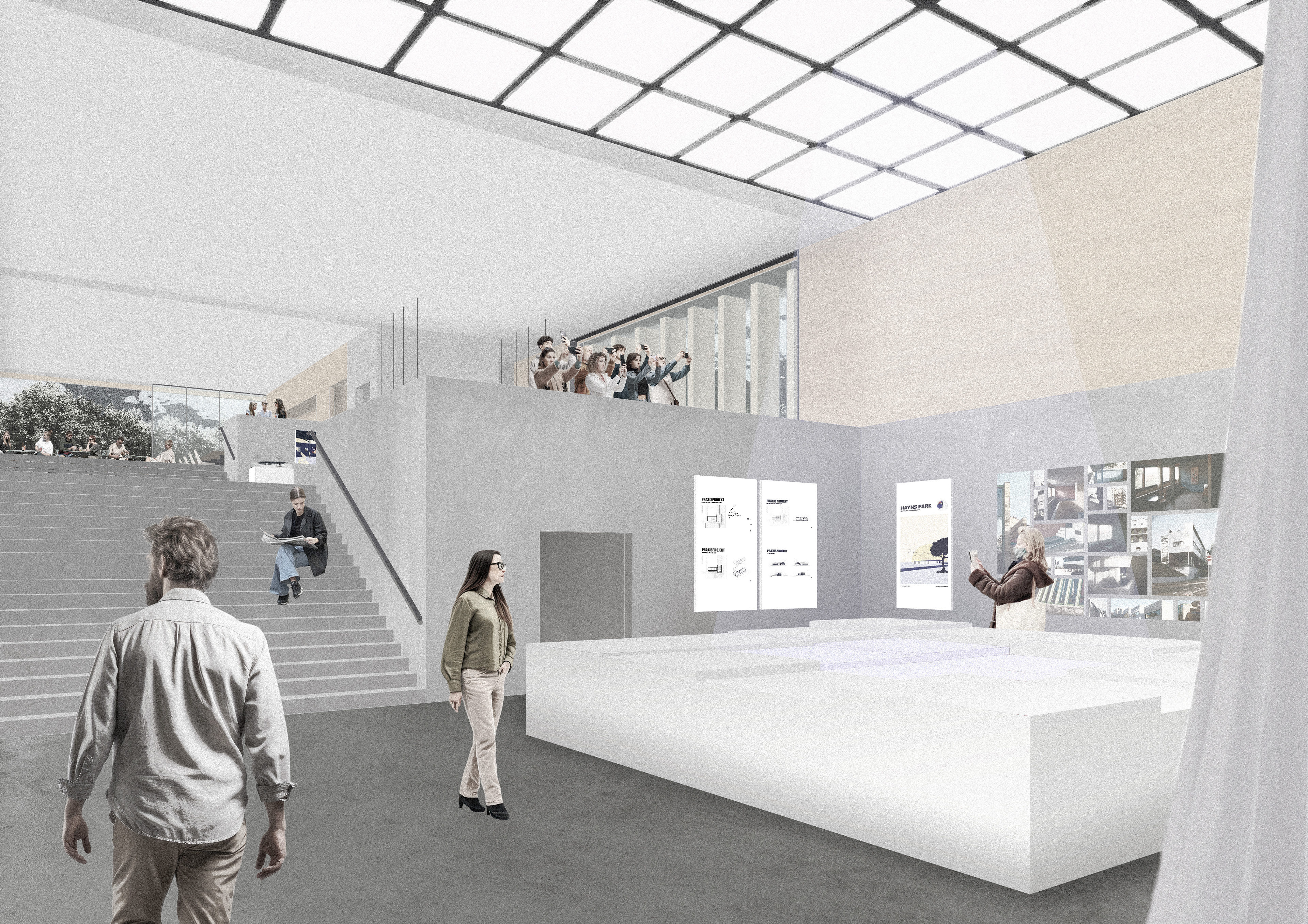
Stuttgart is renowned for its progressive architectural heritage, often sparking debates. A key figure in these discourses was architect Roland Ostertag, known less for his own buildings than for his passionate advocacy for preserving Stuttgart’s architectural identity. His private archive, including a 30 m² city model and urban development proposals, functioned as a public exhibition space until his death in 2018.
The project envisions the “Roland Ostertag House of Architecture” in Stuttgart. It shall house Ostertag’s archived collection, serve as a space for architectural discourse, and retain the intimate, domestic character of the original exhibition. The program includes exhibition areas, lecture spaces, workshops, living quarters, and archival facilities.
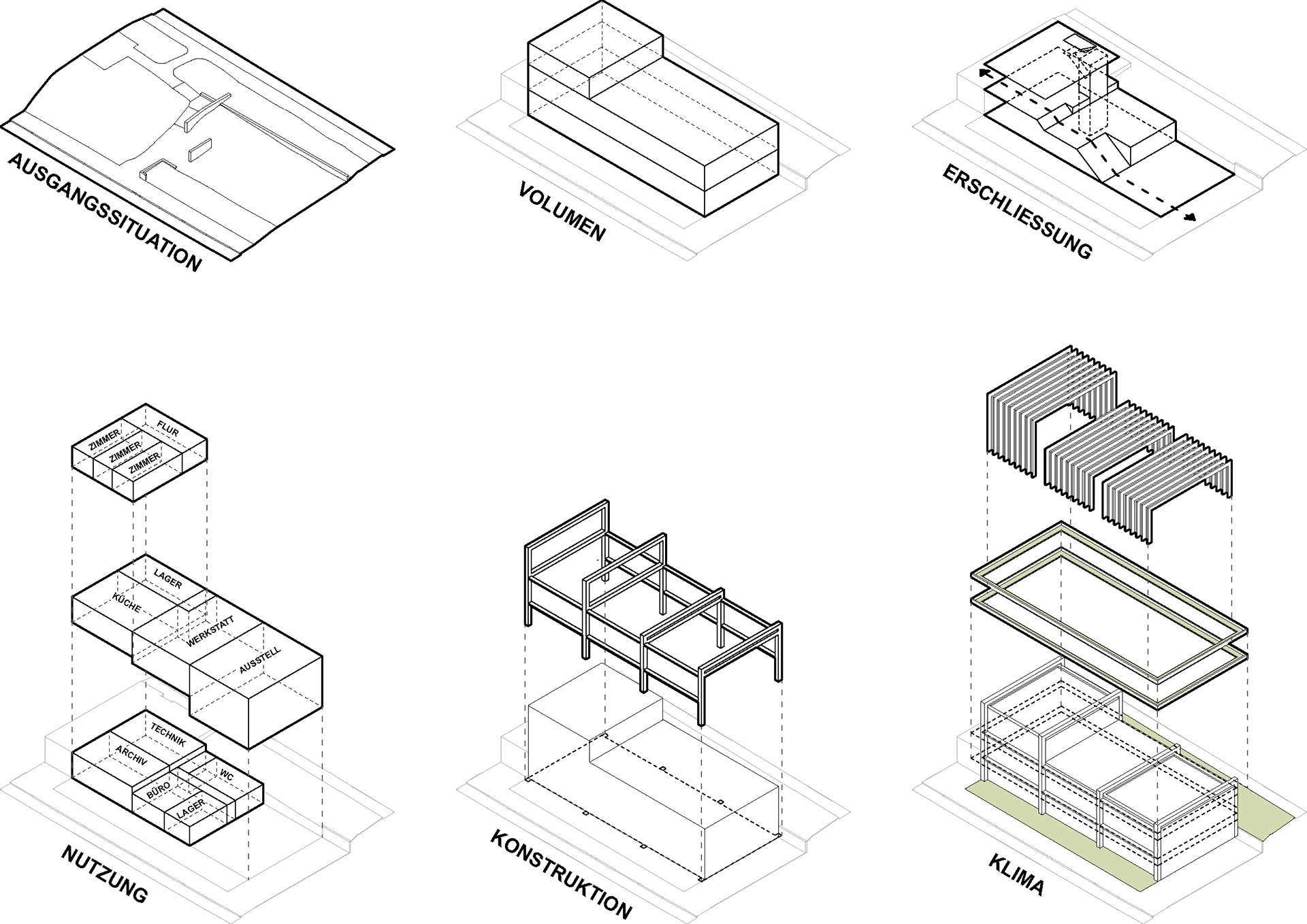
A leading idea is the establishment of the “Roland Ostertag Scholarship” for architecture students. Scholarship holders will live on-site, curate exhibitions, access archival material, and develop independent research projects during their stay.
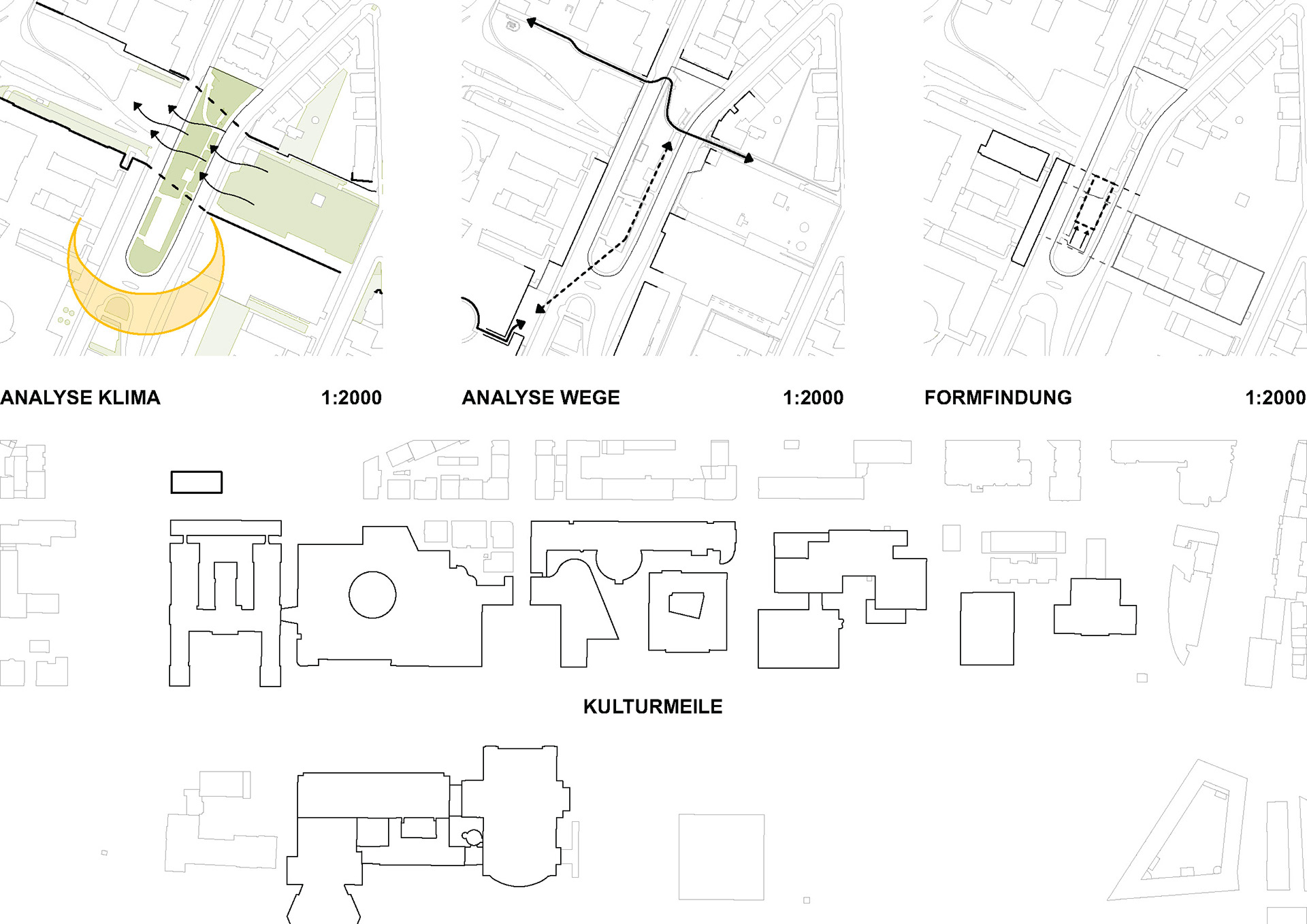
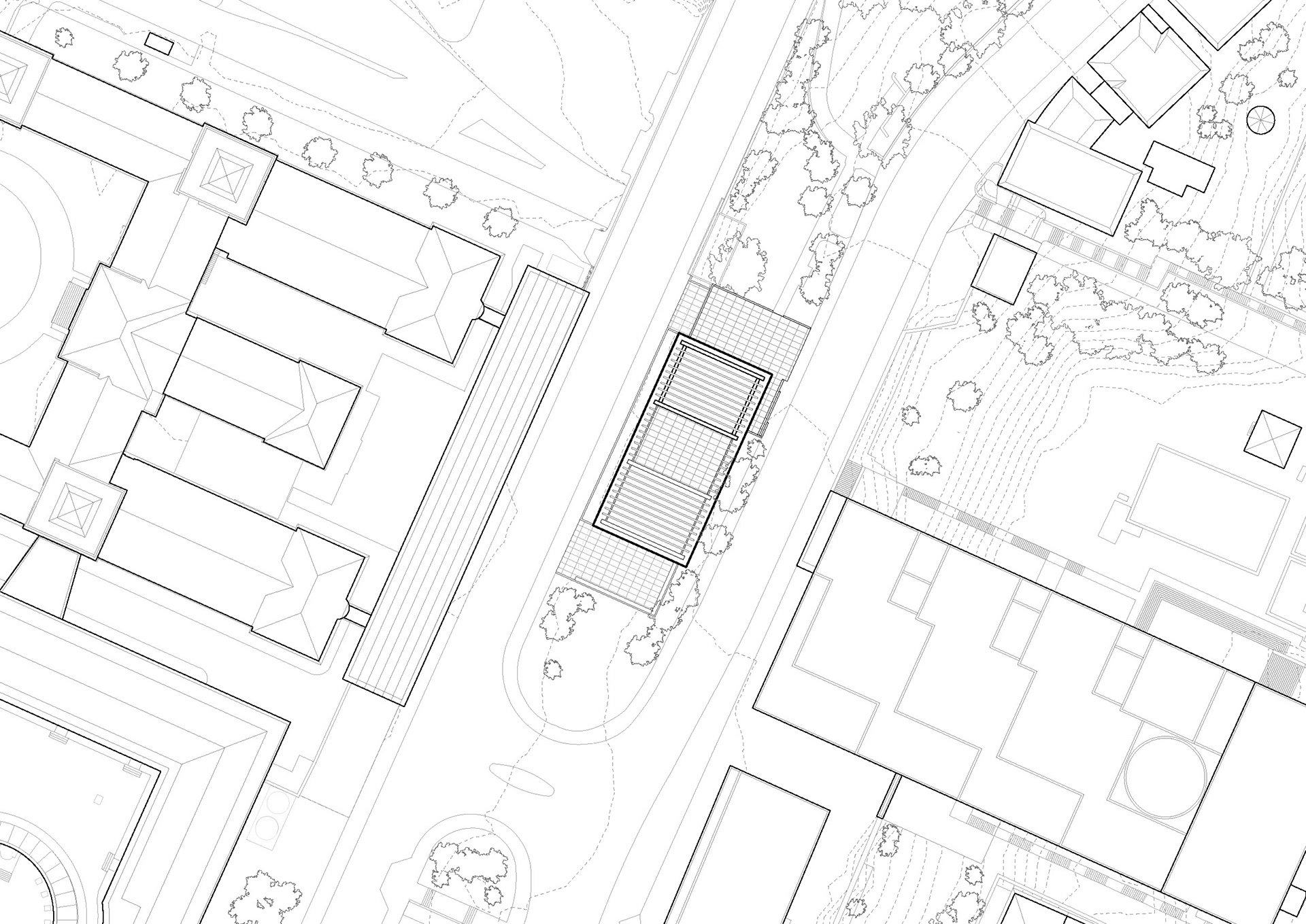
Located in Stuttgart’s city center, the 3,750 m² site lies at the terminus of the city’s cultural axis, between the "Alte Staatsgalerie" and the "John Cranko School". It is intersected by a key cold-air corridor crucial to Stuttgart’s urban climate strategy. Currently vacant, the site includes green space and a playground with low spatial quality.
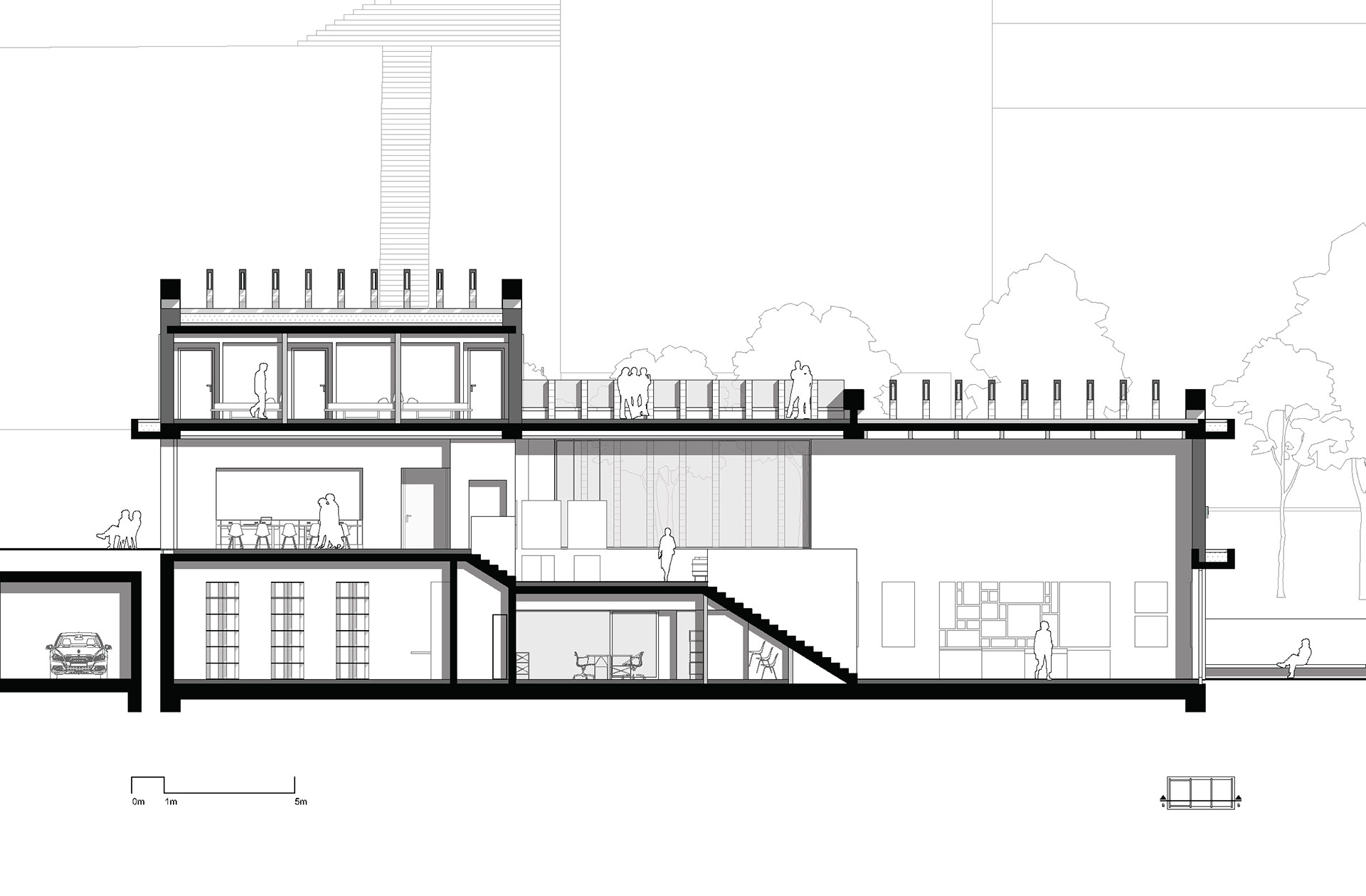
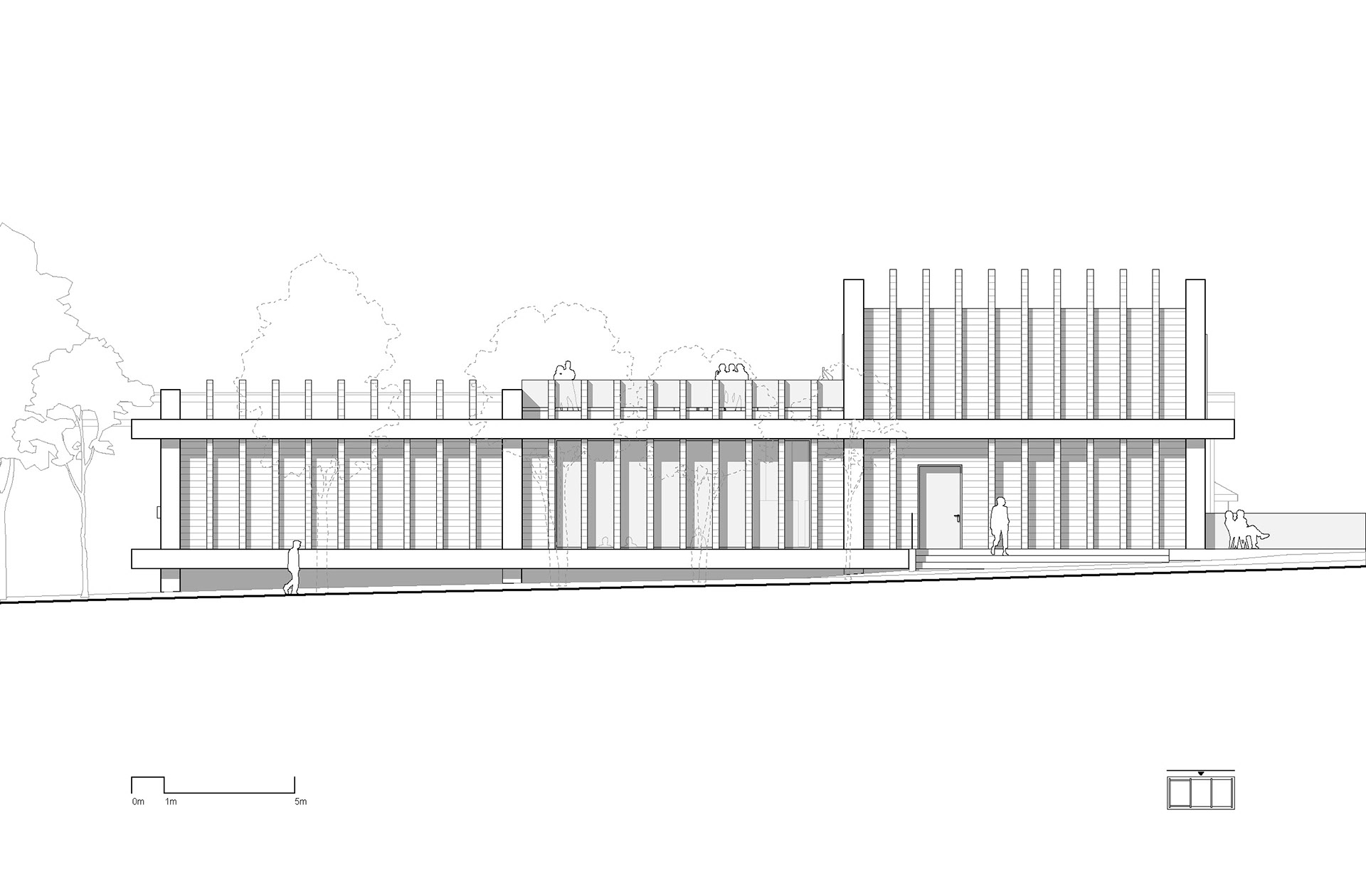
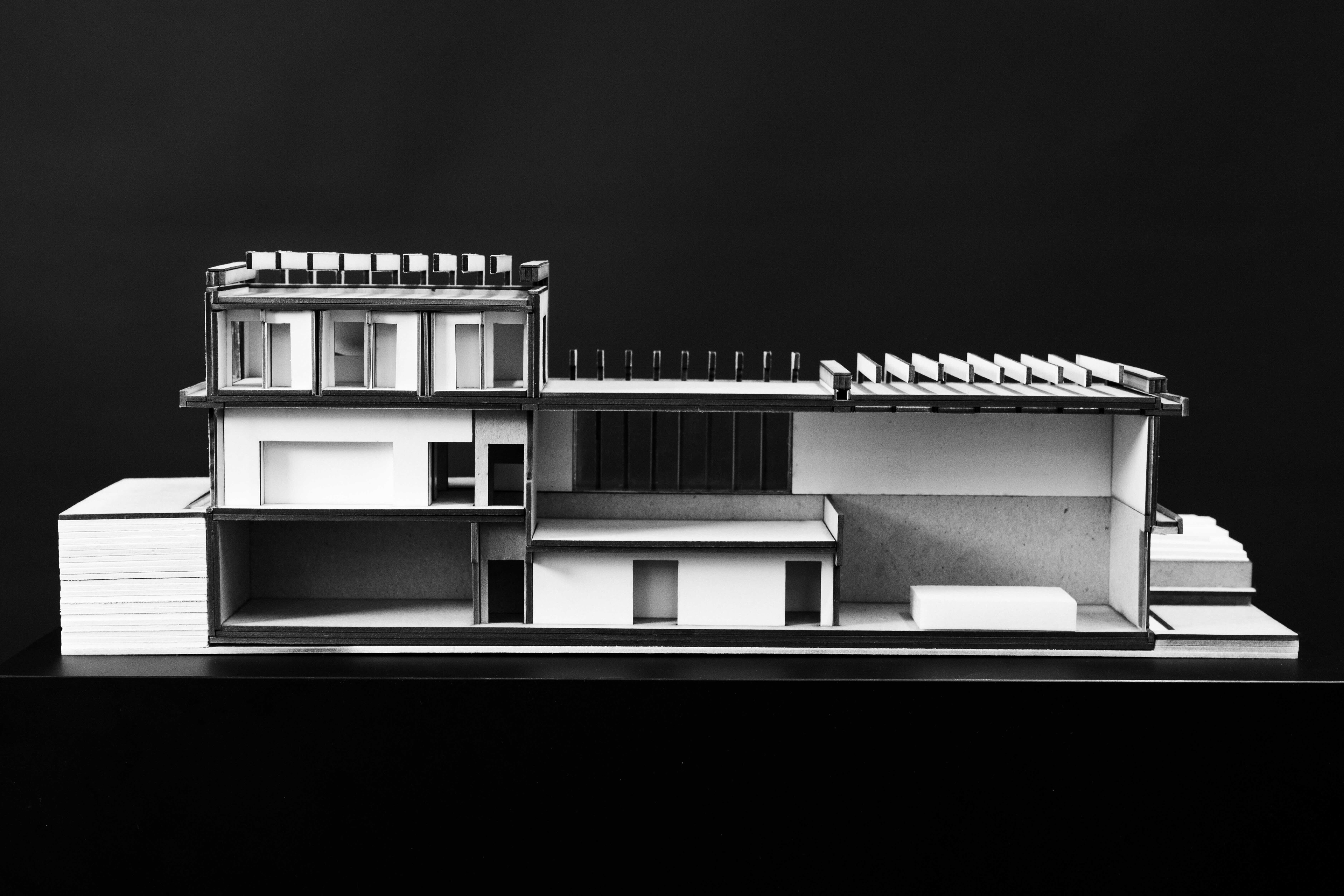
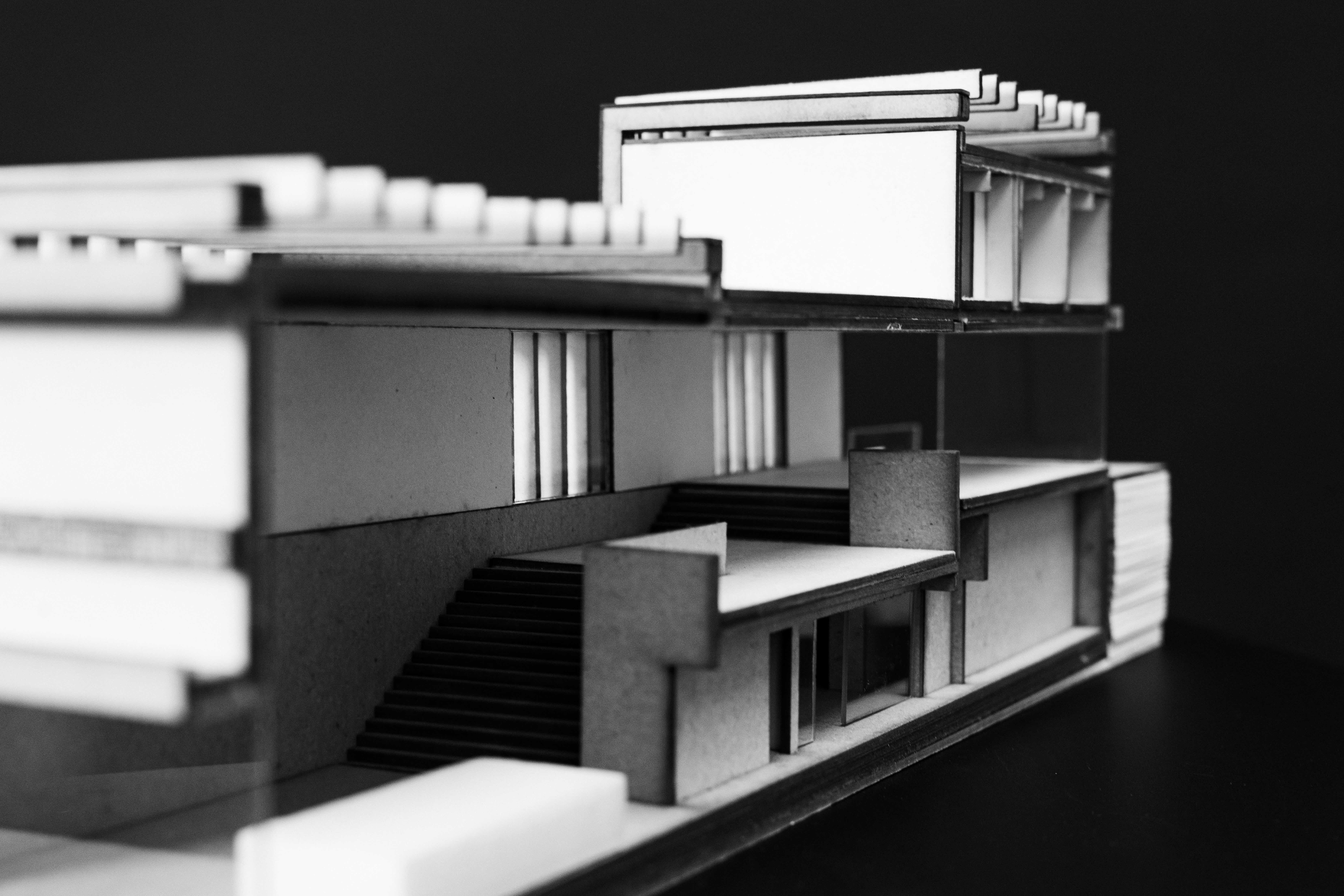
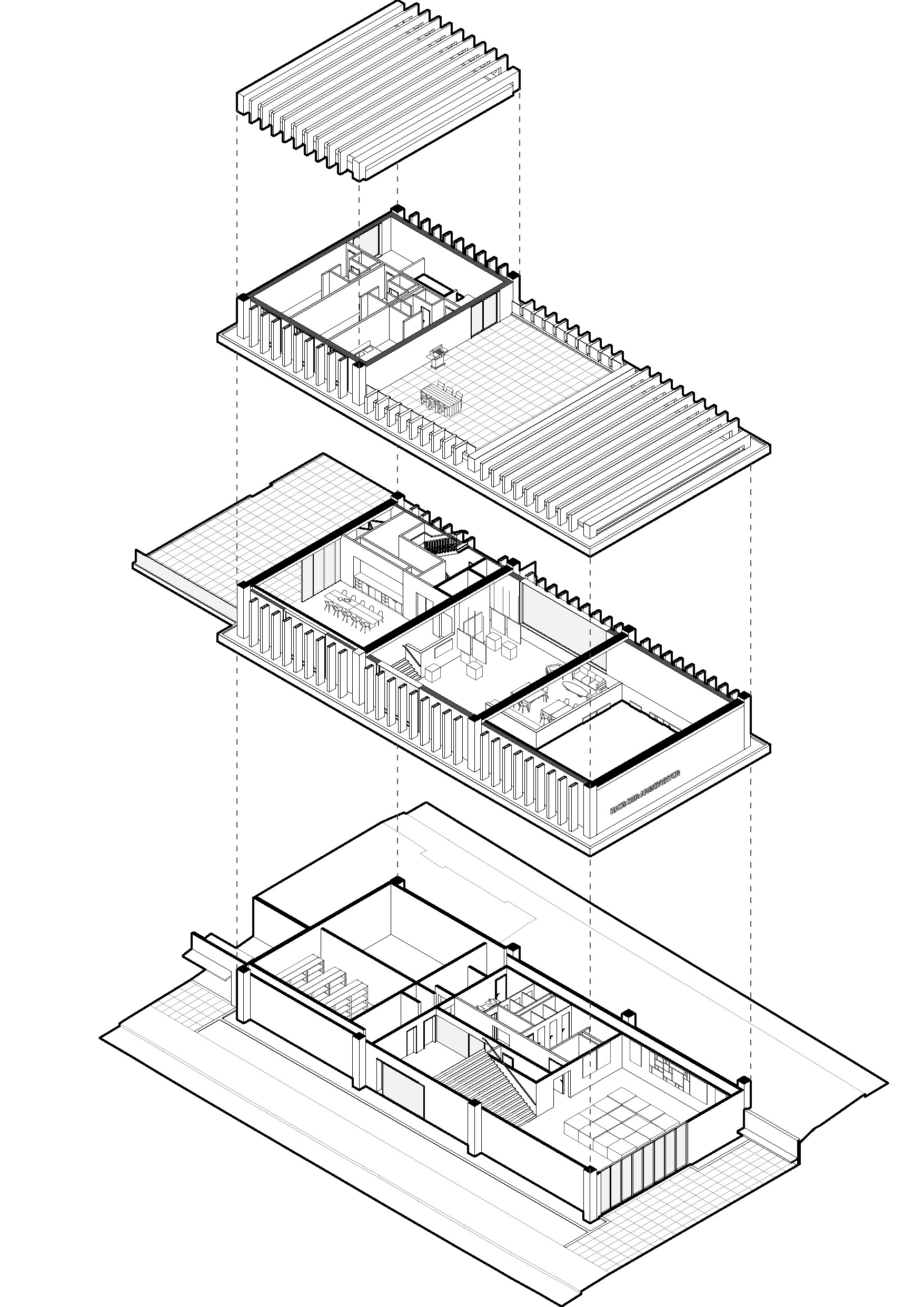
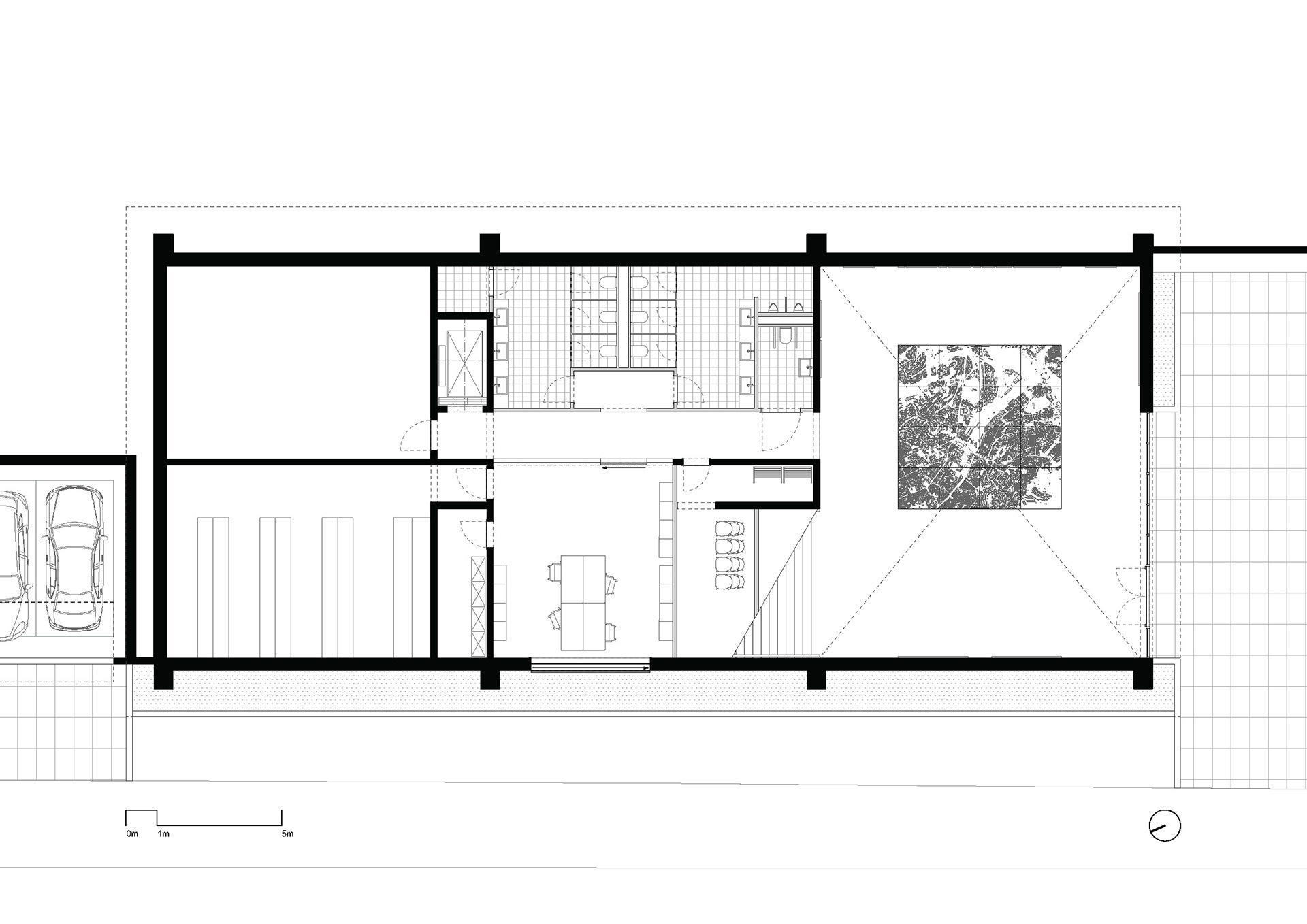
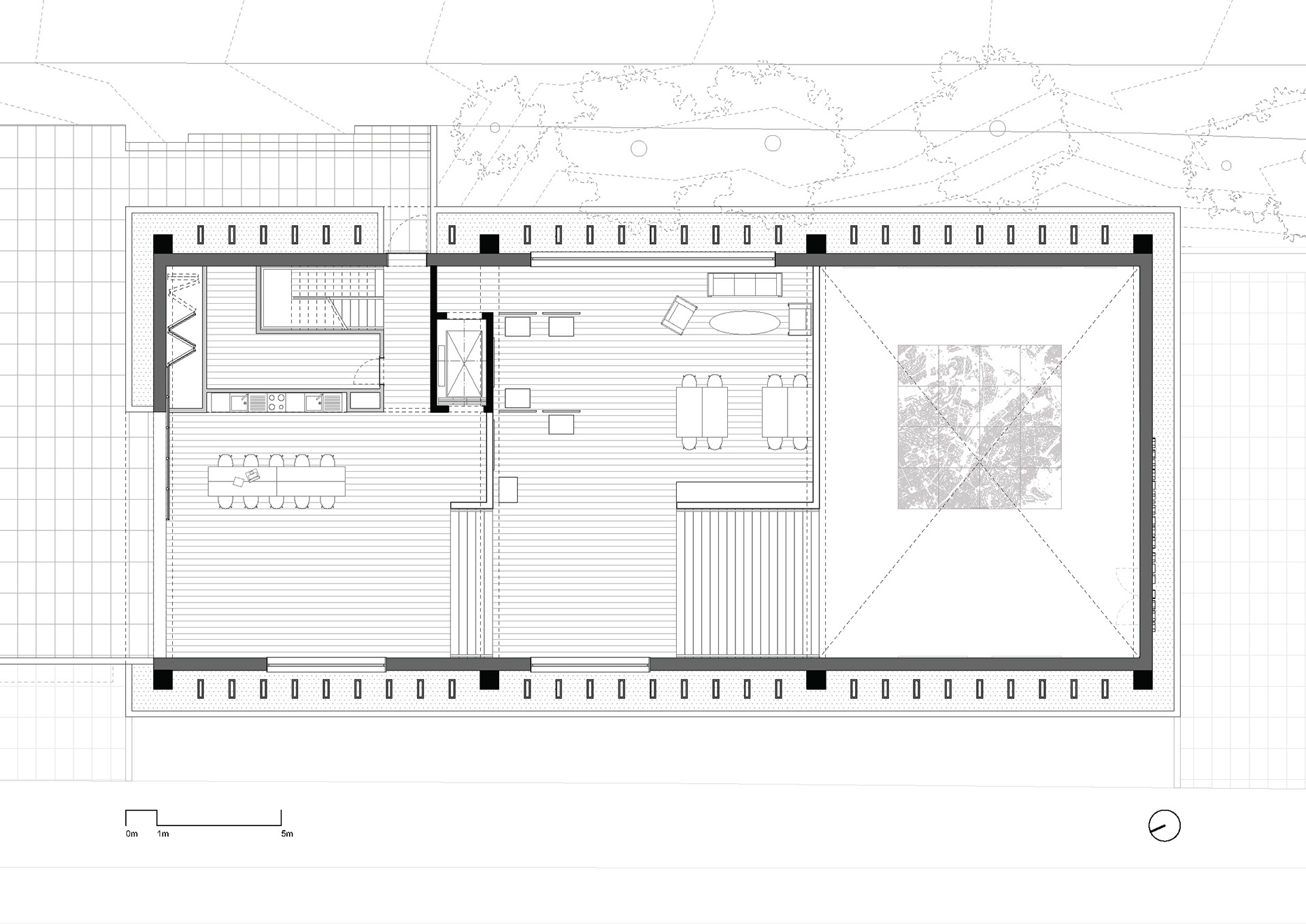
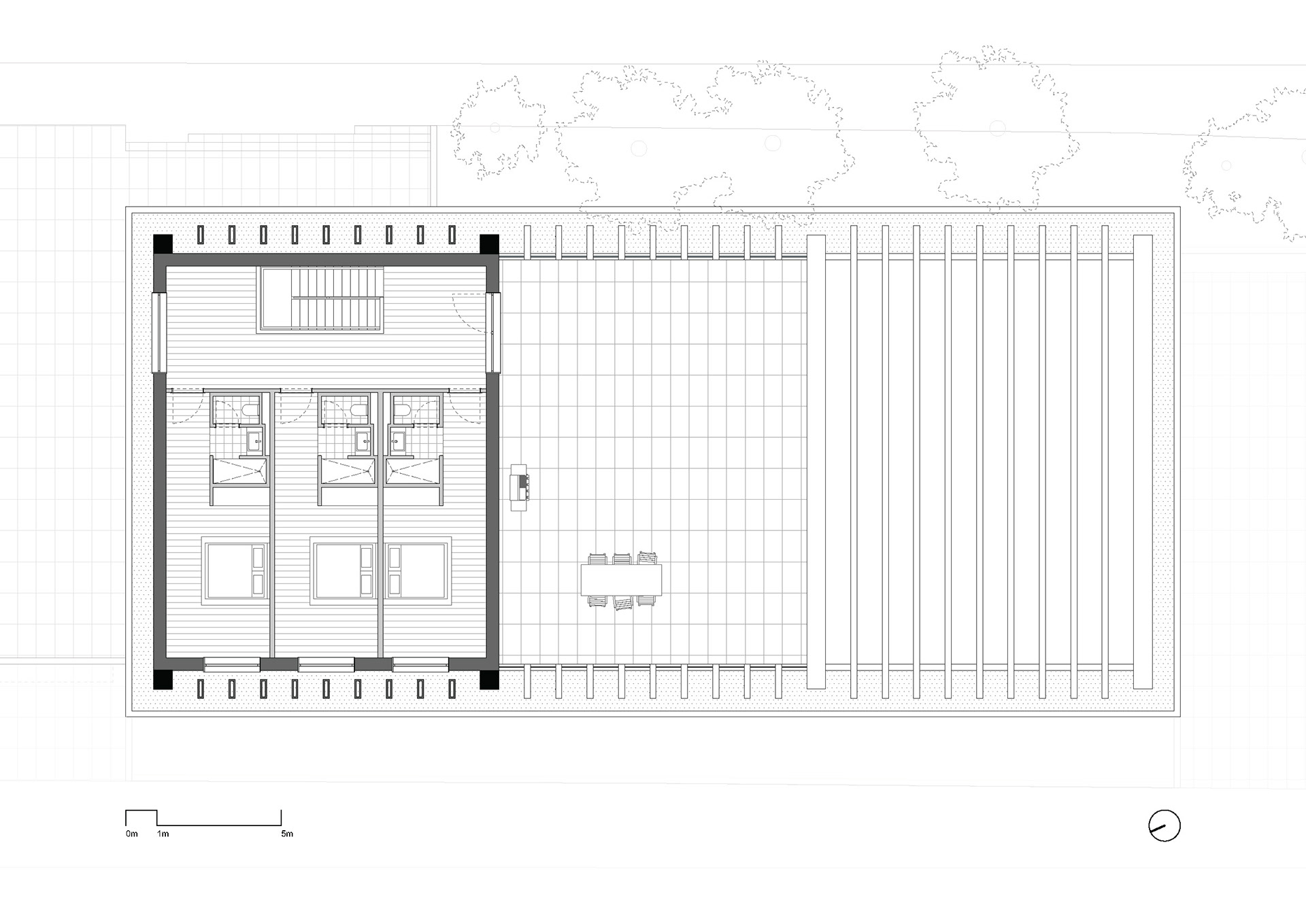
The proposal occupies a 430 m² footprint on the site’s southern edge, preserving green space and airflow. The volume aligns with adjacent buildings and steps with the site’s 4-meter slope. A double-height central space with a connecting staircase serves as exhibition and gathering space. The plan is organized in three equal zones, with the city model and main exhibition in the first third. Upper levels contain workspaces, flexible exhibitions, and living quarters for fellows, including a rooftop terrace with city views.
The structure consists of an exposed reinforced concrete frame, with prefabricated timber infill panels. The base is a waterproof concrete box; upper levels use wood for reduced weight and embodied energy. Interiors retain raw material finishes. Flooring transitions from exposed concrete to industrial parquet.
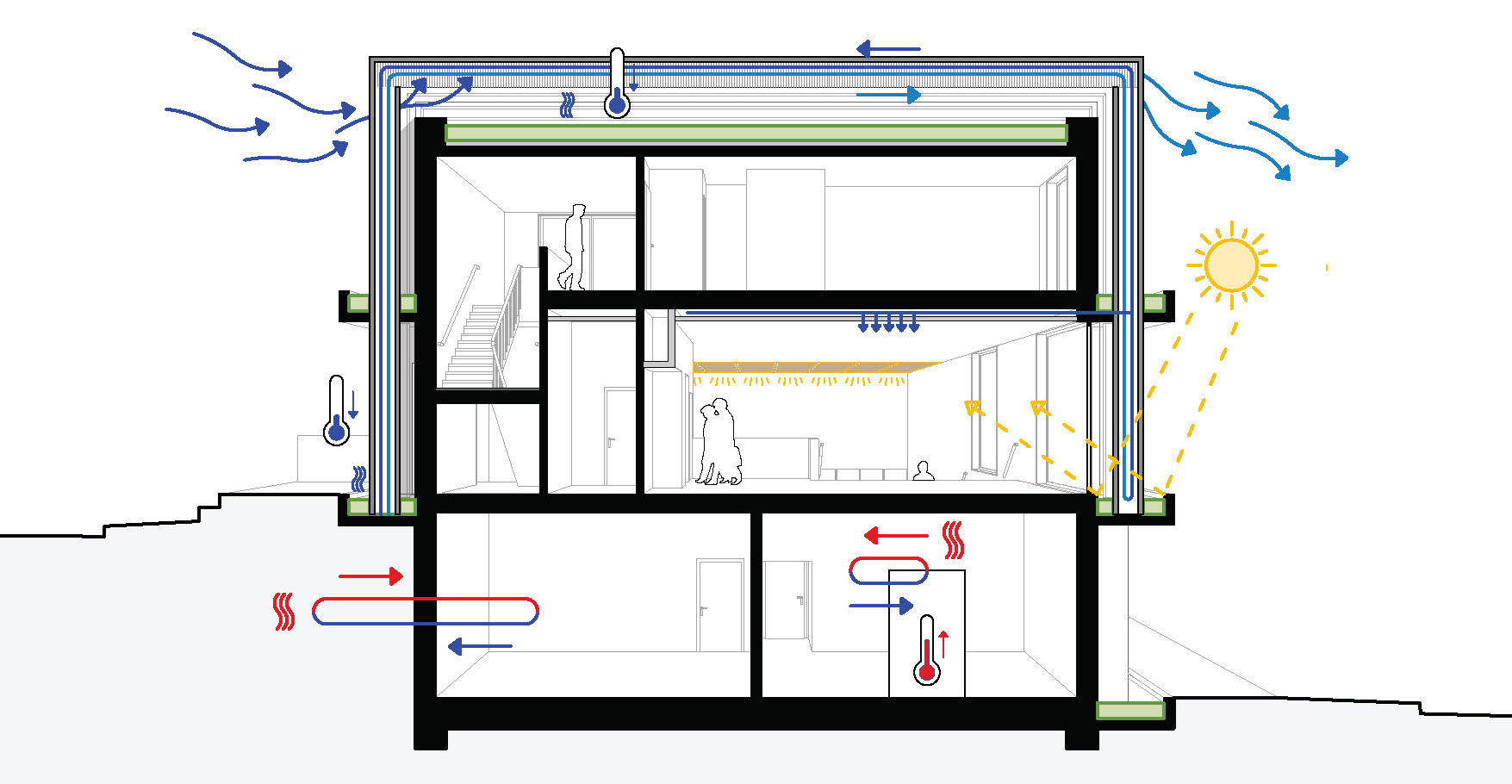
The energy concept combines geothermal and waste heat from nearby infrastructure for winter heating, and natural cooling via the cold-air corridor in summer. A façade-integrated heat exchanger system improves thermal performance. Green roofs and planted balconies enhance microclimate control. Daylight enters via large north-, east-, and west-facing openings; façade fins modulate solar gain. Artificial ceiling lighting simulates natural daylight and integrates projection capabilities for exhibition content.